
Te Hītori o Tieke
Tieke is the home of Ngāti Hinekura. Our tūpuna lived, traded, learned and buried their dead on this terrace above the Whanganui River. This is the story of how Tieke was held, how it was left, and how we came home to it.
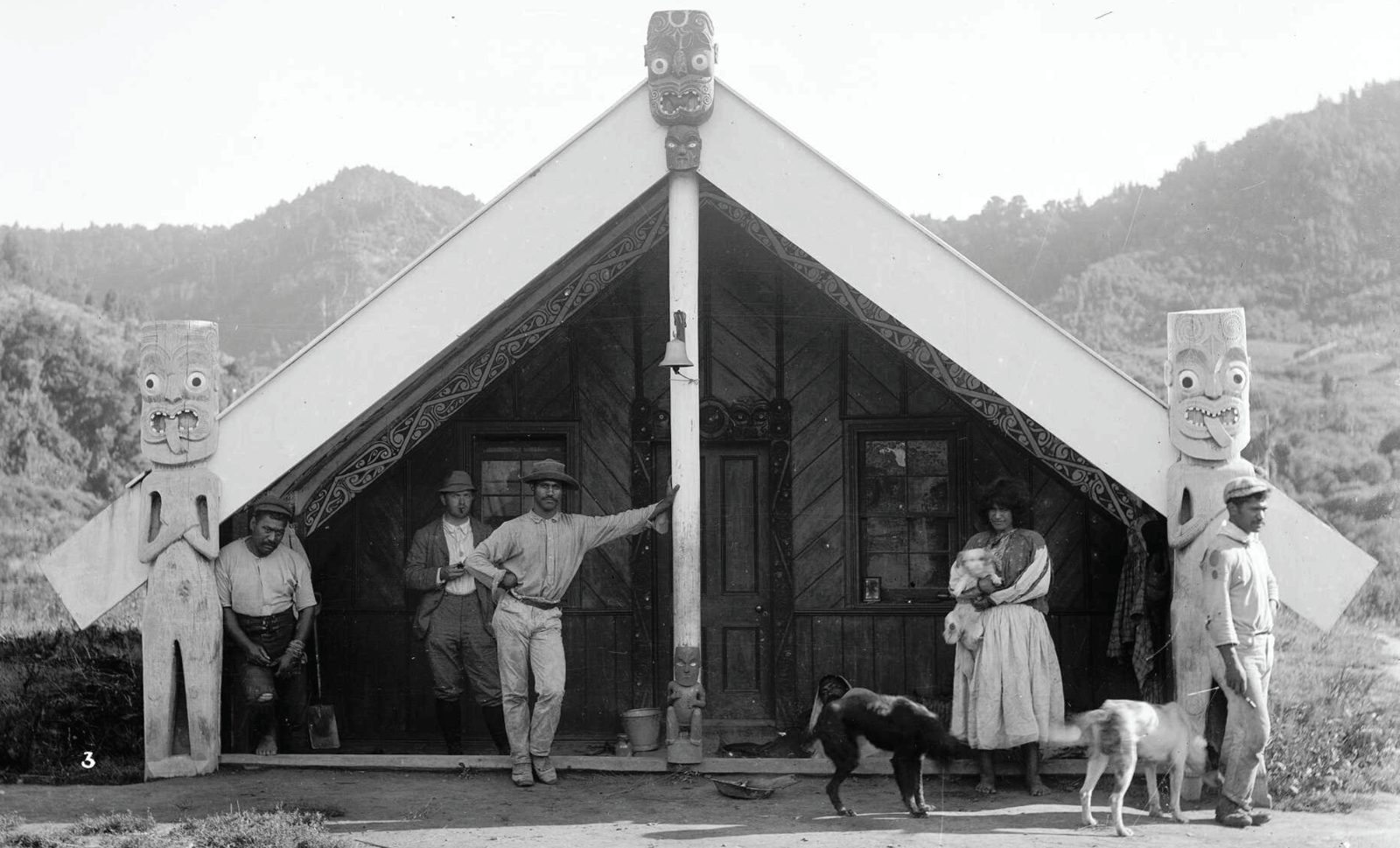
Tieke pā and kāinga
Ngāti Hinekura take their name from Hinekura, daughter of Tukoio and granddaughter of Tamahaki. Tamahaki and Tukoio were important figures on this land, and their mana lives on in their descendants, Ngāti Hinekura, the people of Tieke. In the nineteenth century, when our people dealt with the Crown, they named themselves Ngāti Hinekura and sometimes added their descent from Tamahaki.
Tieke lies about 120 kilometres up the awa from Whanganui. Before Pākehā arrived, it was a pā, a trading centre and a place of learning near the Manganui o te Ao route inland. Close by is Okirihau, a fortified puke that protected the people of the kāinga. Its trenches can still be seen today, and an urupā sits on the hill. Tieke was one of a string of Tamahaki kāinga along this stretch of the river, together with Parewaewae, Te Rarapa, Okirihau, Mangapapapa, Tahereaka, Kirikiriroa, Kaiwhakauka and Te Whakahoro.
Leaving the awa
From the 1870s the Crown bought up land around the upper river in what became the Waimarino purchase. Te Rangihuatau, who lived at Tieke, gave evidence to the Native Land Court on the rights of the hapū. Of Ngāti Hinekura he said:
"I know the hapu Ngati Hinekura (daughter of Tukoio) and on which their claims are founded."
Te Rangihuatau, Native Land Court
He traced their boundary from Te Arawhata near Popotea, inland and back to the Whanganui River at Te Miro, then down the river to Tieke. Ngāti Hinekura refused to sell and were awarded 3,640 acres, later surveyed as Waimarino 5. Tieke was left out of it. Te Rangihuatau believed Tieke was protected, and his people stayed on long after the purchase was done.
In 1908 Te Rangihuatau died in Wellington, where he'd gone to pursue a land claim. He was brought home and buried at Tieke. Soon after, the kāinga emptied as whānau moved to Parinui and further afield. The land became scenic reserve and later part of Whanganui National Park, and a hut for river travellers was built where the kāinga had stood.
The return
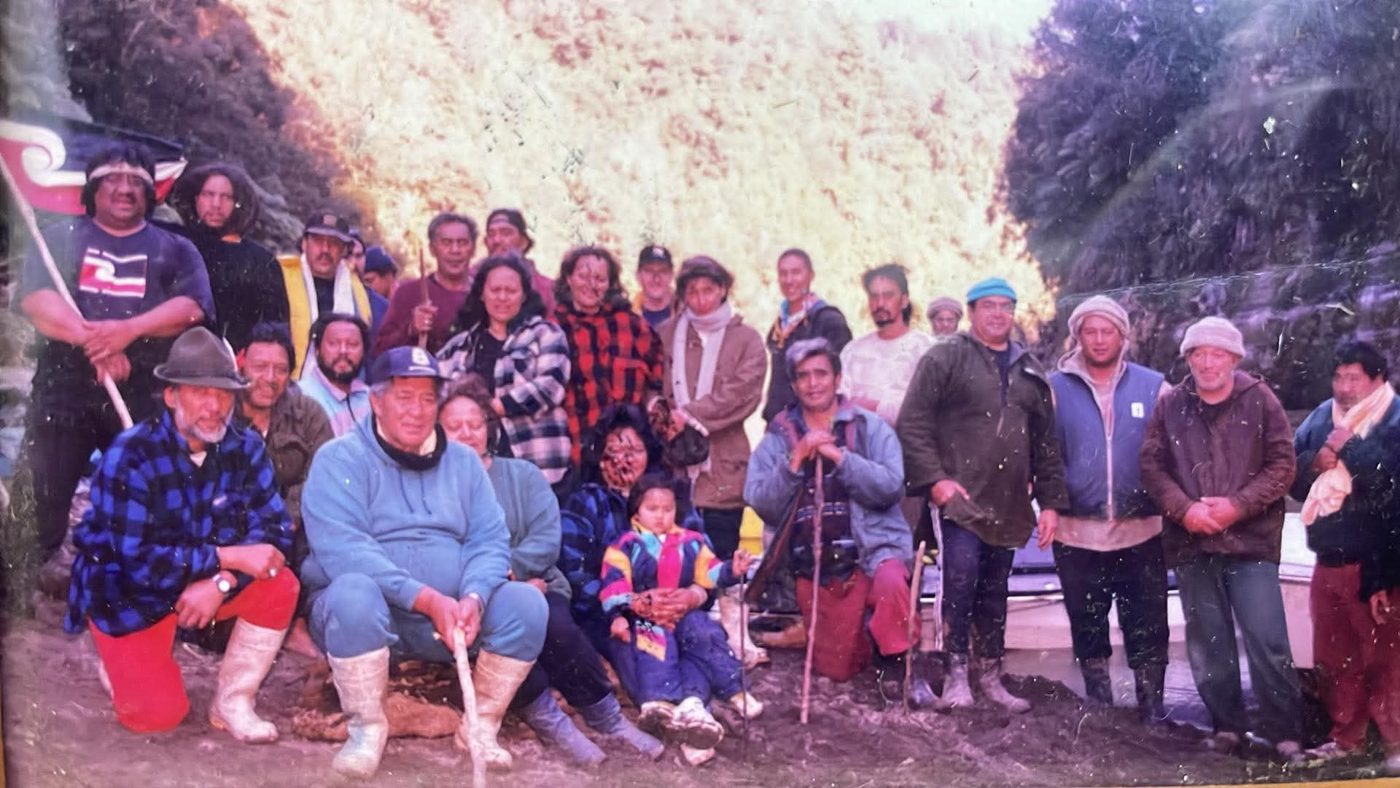
In the early 1990s, the Department of Conservation began charging river users to stay at its huts, Tieke included. For the uri of Tamahaki, that was the final straw. If the Crown could charge people to stay on their land, their rangatiratanga meant nothing. In September 1993, whānau came up the river by jetboat and stepped ashore to reclaim Tieke, rekindle the ahi kā and protect it from misuse.
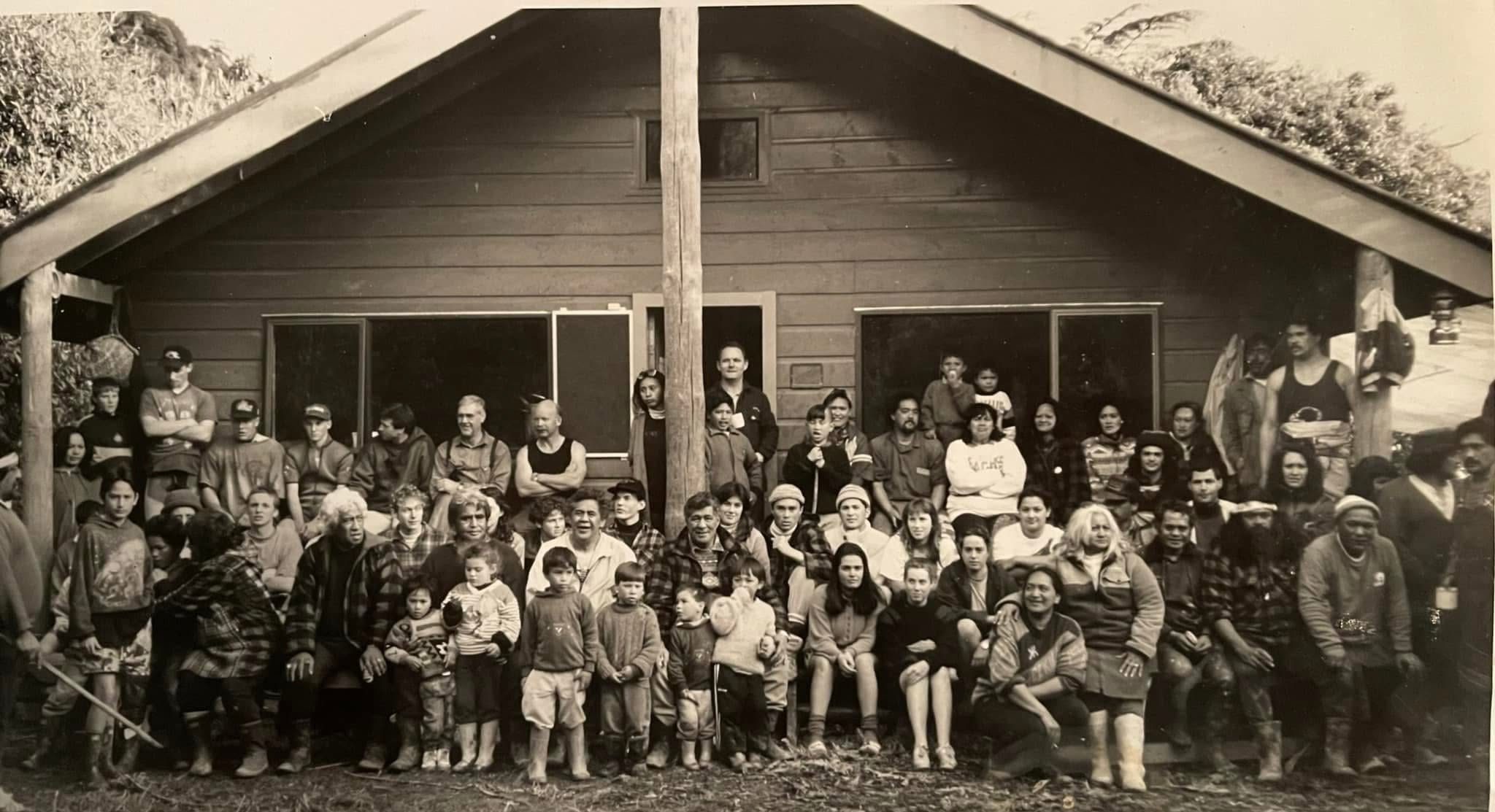
"We felt that the only way that we could get people to listen to us was to make a political statement, and Tieke was our political statement. It was how we promoted our own tino rangatiratanga over our lands and our river."
Paora Haitana, evidence to the Waitangi Tribunal
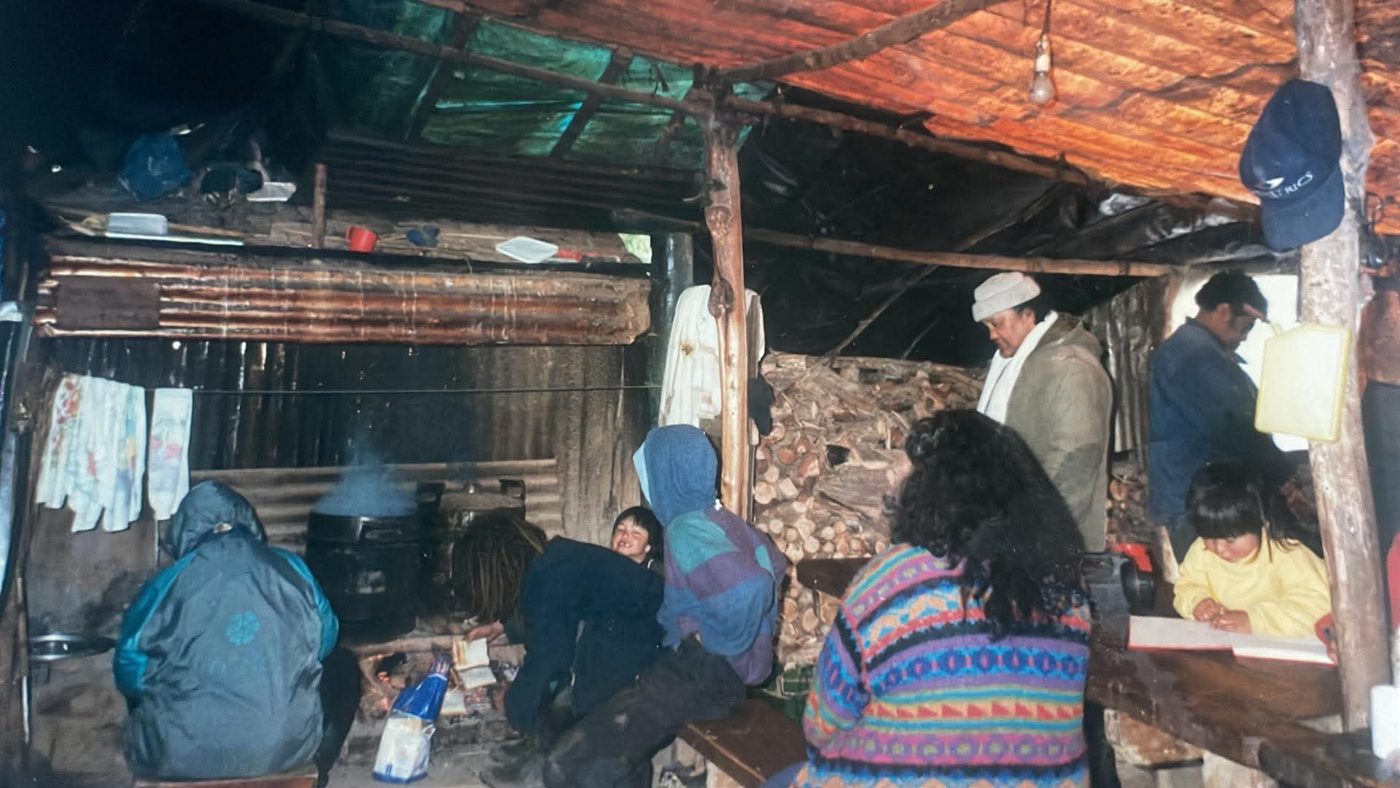
The early years were hard, and officials wanted the whānau removed. In 1994 an agreement was reached that formally ended the occupation and recognised the whānau at Tieke as kaitiaki. Nothing changed on the ground. The whānau stayed.
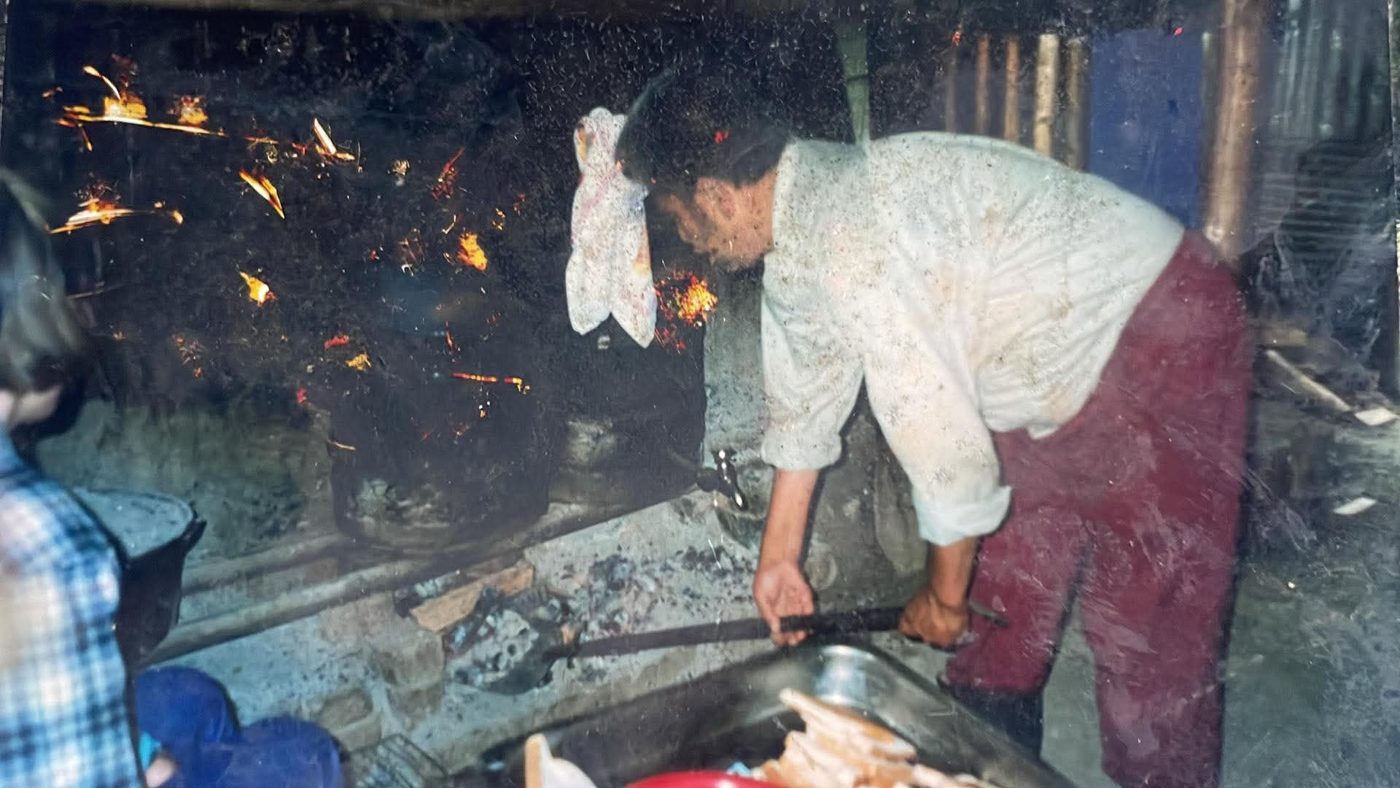
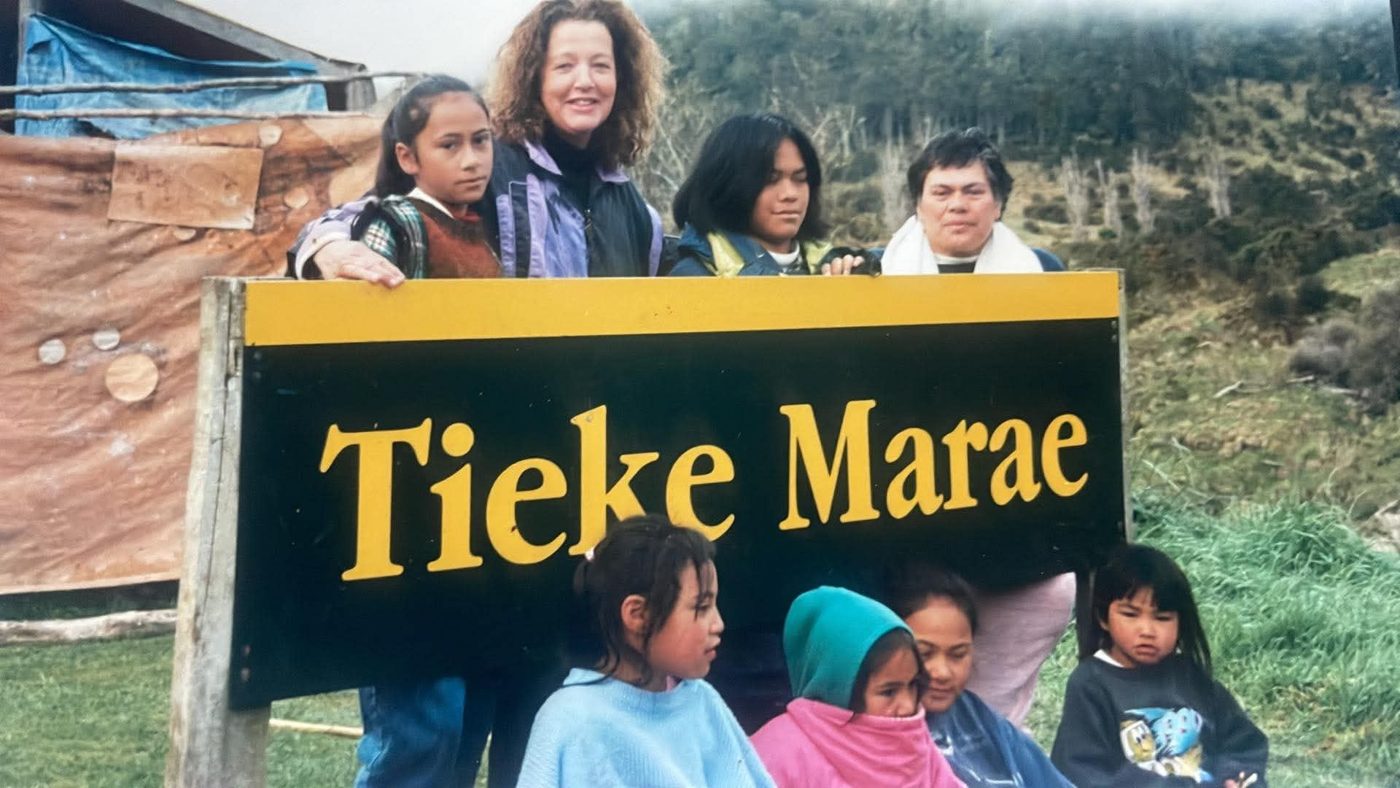
They lived through every season in blue canvas huts, and the blue roof of the wharenui remembers them today. Larry and Rangimarie Ponga lived at Tieke full time for eight years, and Larry lies in the Tieke urupā. In 1997 the descendants of Taiwiri Toho brought their kuia's mana and wairua home to her kāinga and urupā.
Tieke was the first step. In 1994 Mark Koro Cribb set up the Tamahaki Council of Hapū, and in 1995 he and Larry Ngakoata Ponga lodged the Wai 555 claim for the descendants of Tamahaki. Both men passed away before it was heard. Rangi Bristol and Robert Cribb carried it on.
Te Puawaitanga o Hinekura and the pou whenua
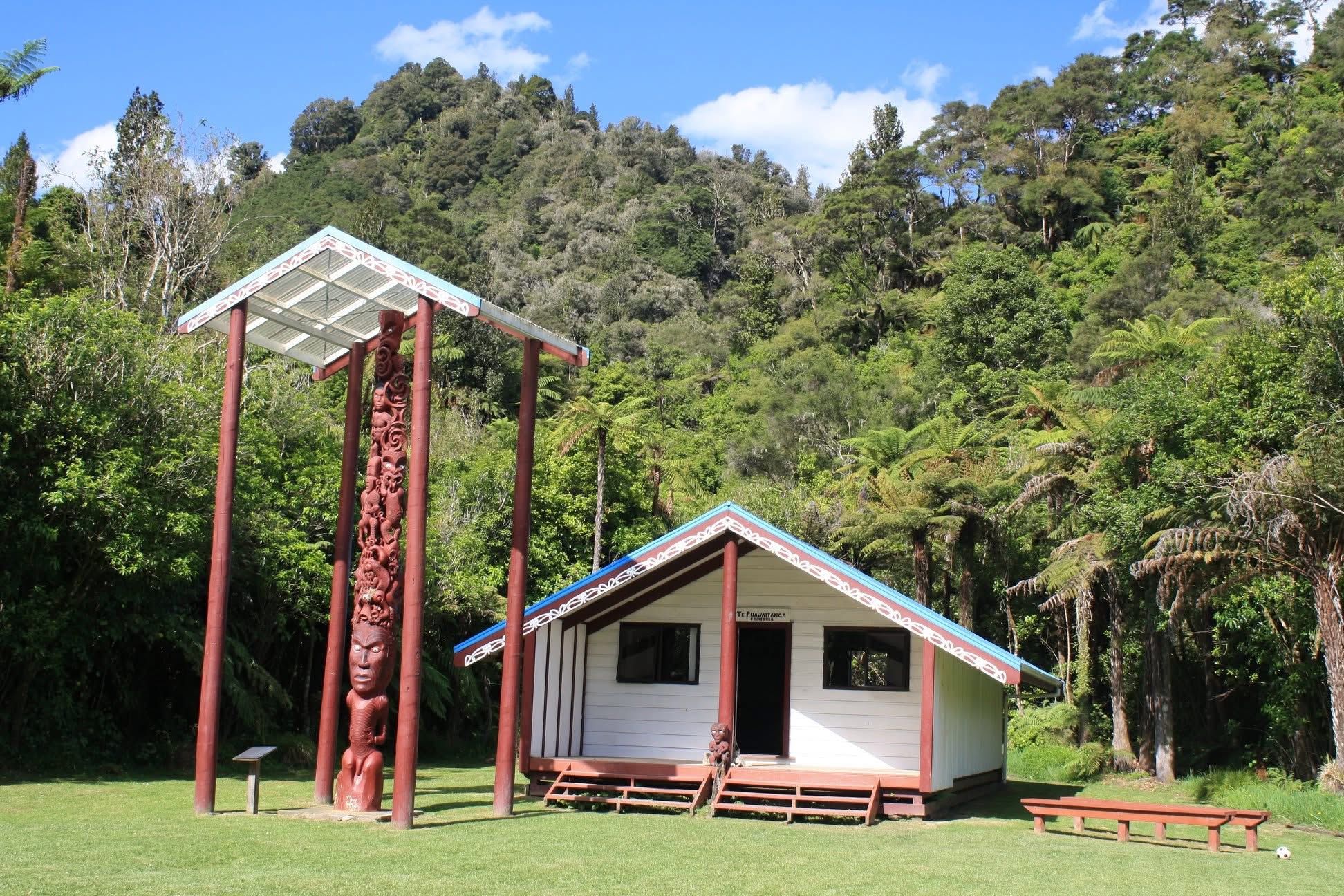
In 1999 the Tieke Committee and the Department of Conservation signed a memorandum of understanding. It recognised the wharenui and the pou whenua as belonging to the hapū, even though they stand inside a national park. The wharenui, Te Puawaitanga o Hinekura, carries the name of our tupuna.
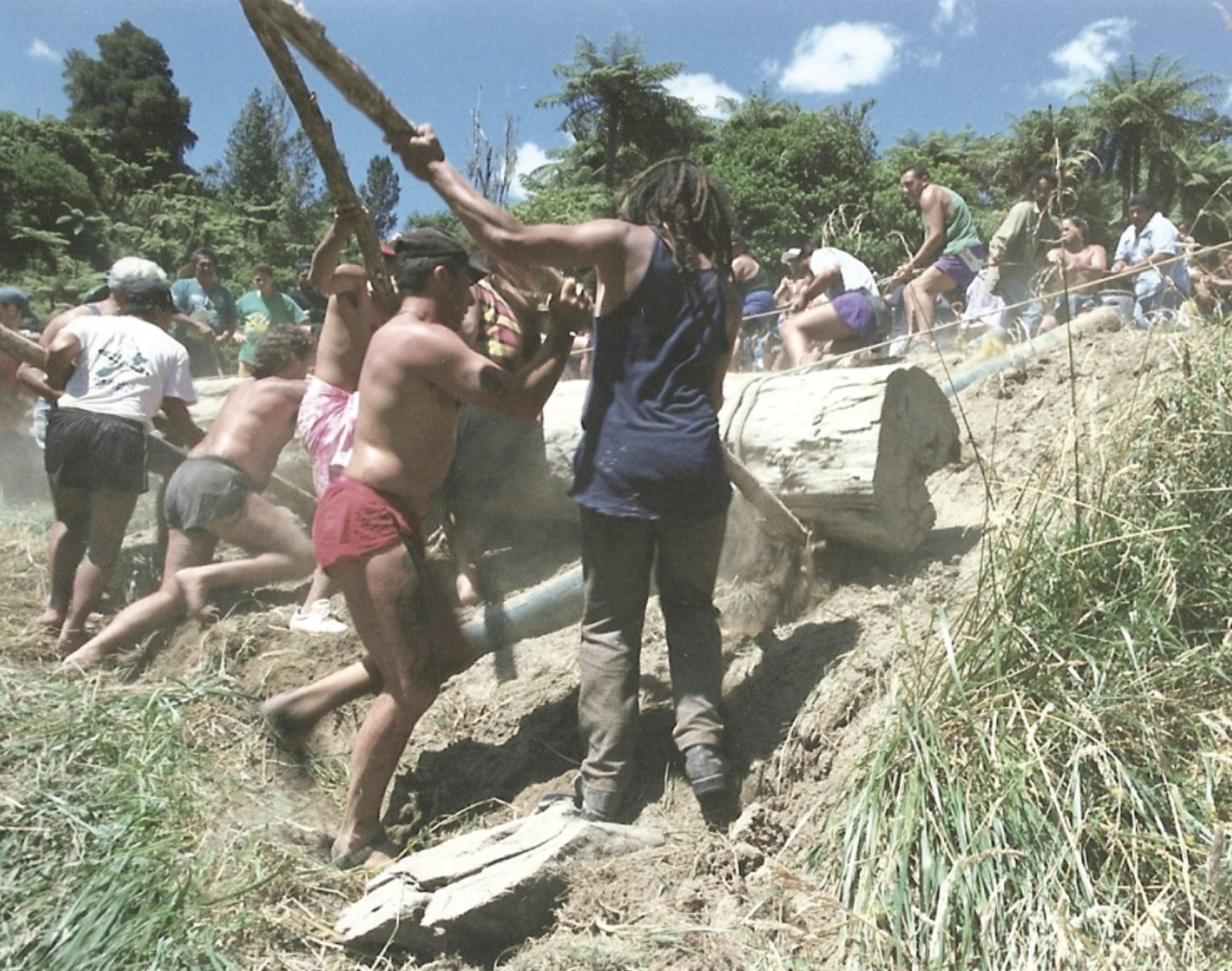
The pou was carved from a tōtara log the whānau dragged up from the flood plain. It carries the whakapapa of the hapū, the whenua and the awa. Tamahaki stands at the base, with Tupoho, Tama Upoko and Hinengākau above him on one side. On the other side, from the top, are Ruapehu, Tongariro, Whanganui and Taranaki. In the middle of the front sits Korekoreanu, between the tūpuna, the maunga and the awa. On the back, behind her grandfather Tamahaki, is Hinekura, looking over the wharepuni.
Tieke today
Tieke is a living marae, and the tikanga-a-hui is paeke. Ngāti Hinekura remain kaitiaki, working alongside the Department of Conservation and welcoming thousands of manuhiri who come down the river.
This history draws on the kōrero and records of Tamahaki and Ngāti Hinekura.